Neonpass
Company:
Hoobox
Timeline:
2 Years
My Role:
Lead Designer
Responsabilities:
Benchmarking, Research, Interaction design, Prototyping, Usability test, Branding.
OVERVIEW:
In mid-2019, when I was working as a freelancer, I searched for jobs through online platforms like Workana, Upwork, and Fiverr. Among the projects I developed at that time, WikiVeg stood out because it is still online and highly rated today.
I was sent a descriptive memorandum detailing how the app should be and what functionalities it should have, so my job was just to develop the interface. The app should allow users to register supermarket shelf products they had doubts about regarding their composition. It should be possible to photograph the packaging and subsequently have a space where the community could discuss the composition to reach a verdict: vegan or not vegan, and justify this verdict.
Initially, the app was to be developed only for the Android platform, so as a basis for the project, I chose Material Design because I was familiar with it and it was available for download on Adobe XD (the software I used at the time).
I started the project by creating basic wireframes and quickly realized that Material Design would not meet all the necessary requirements, especially in the parts involving cards and review counters, since in the case of WikiVeg, the information had to be separated by verdicts, in addition to the discussion space.
In some meetings with stakeholders and discussions about the wireframes, I already had the beginnings of what would become WikiVeg, which is still online today: I was certain that it would be necessary to customize some components of Material Design by applying the brand's color and adding some new functionalities, but nothing too complex.
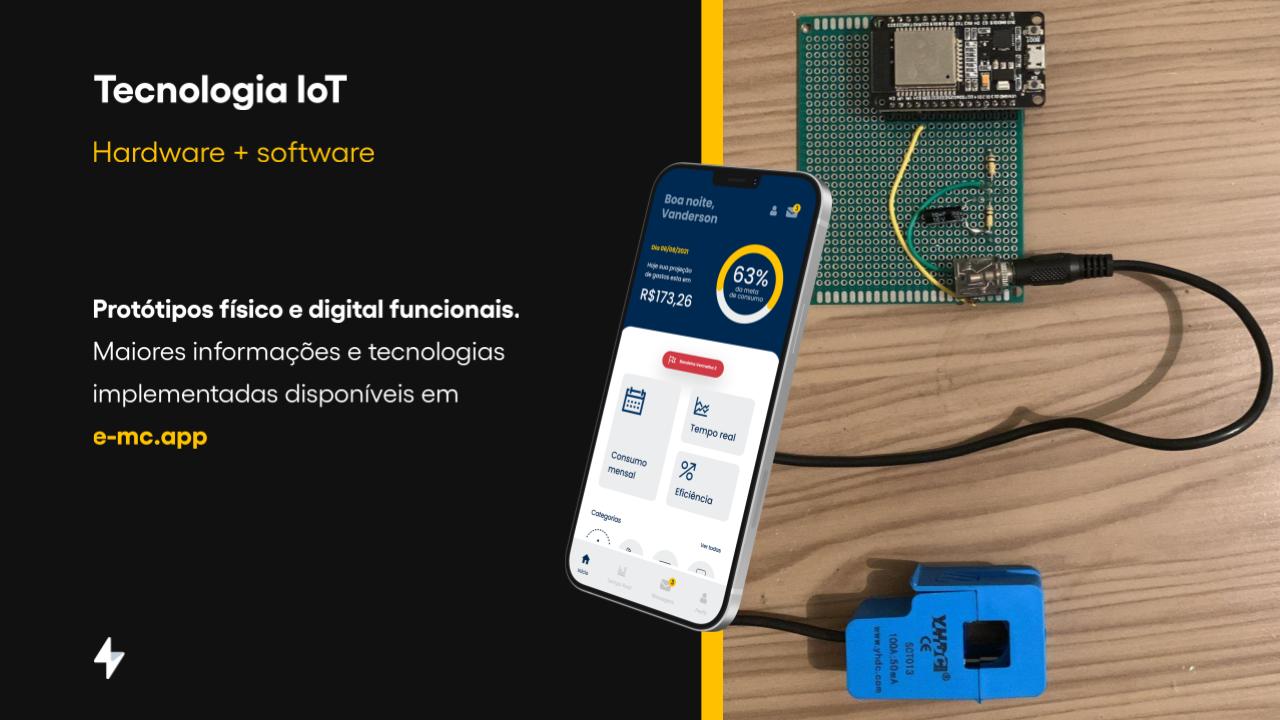
Prototypes!
While researching possible hardware options to implement the hardware prototype, I came across the ESP32, a kind of low-cost ARDUINO. With a few resistors and a non-invasive sensor (the blue ring in the photo above), it could measure how many watts are passing through a wire and send this information to a remote database for analysis, storage, and transmission to customers via the app. With the help of a friend from my workplace at the time, I managed to run the prototype connected to my laptop's power supply, and the measurement was highly consistent. Subsequently, we developed various wireframes and interface prototypes to test with users.
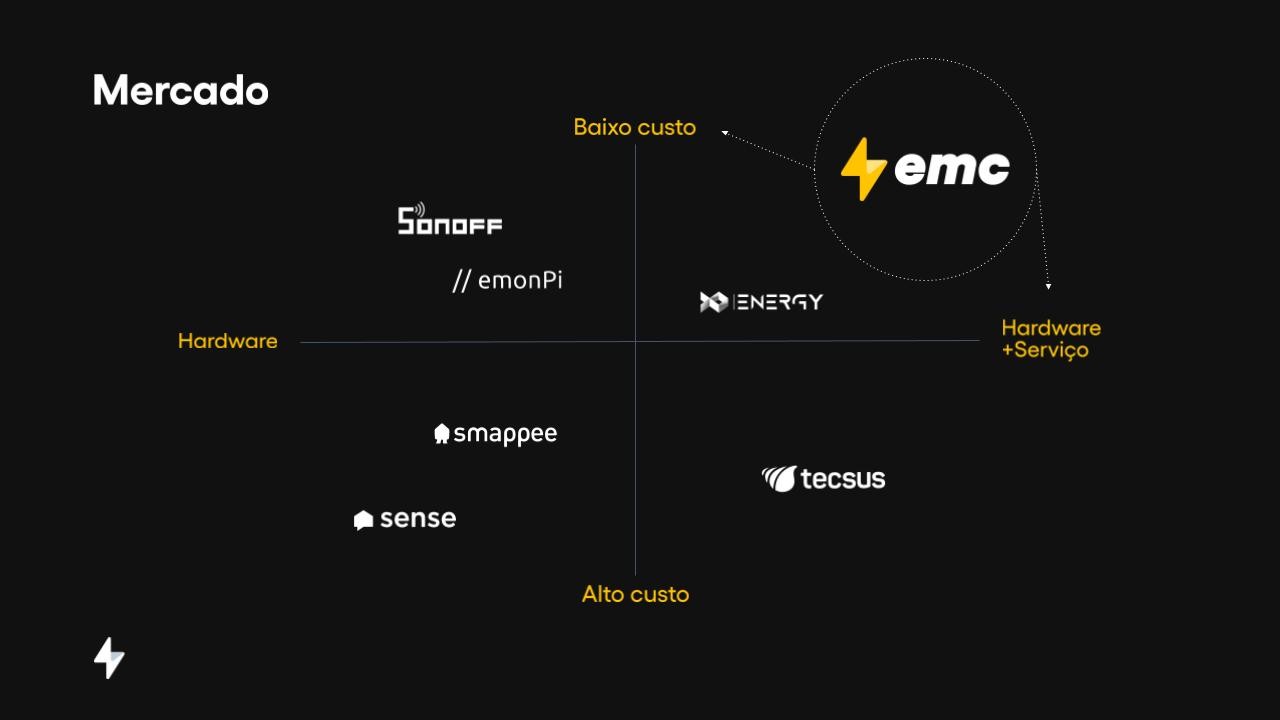
Market benchmark
While conducting market research, we discovered several solutions very similar to ours. It was evident that many had encountered the challenge of accurately measuring energy expenses, not only in Brazil but also internationally. However, within the country, we identified only XP Energy, a startup based in the north that initially targeted only businesses. Their billing model involved renting the equipment, resulting in a monthly cost for the customer, which, in our opinion, was not feasible.
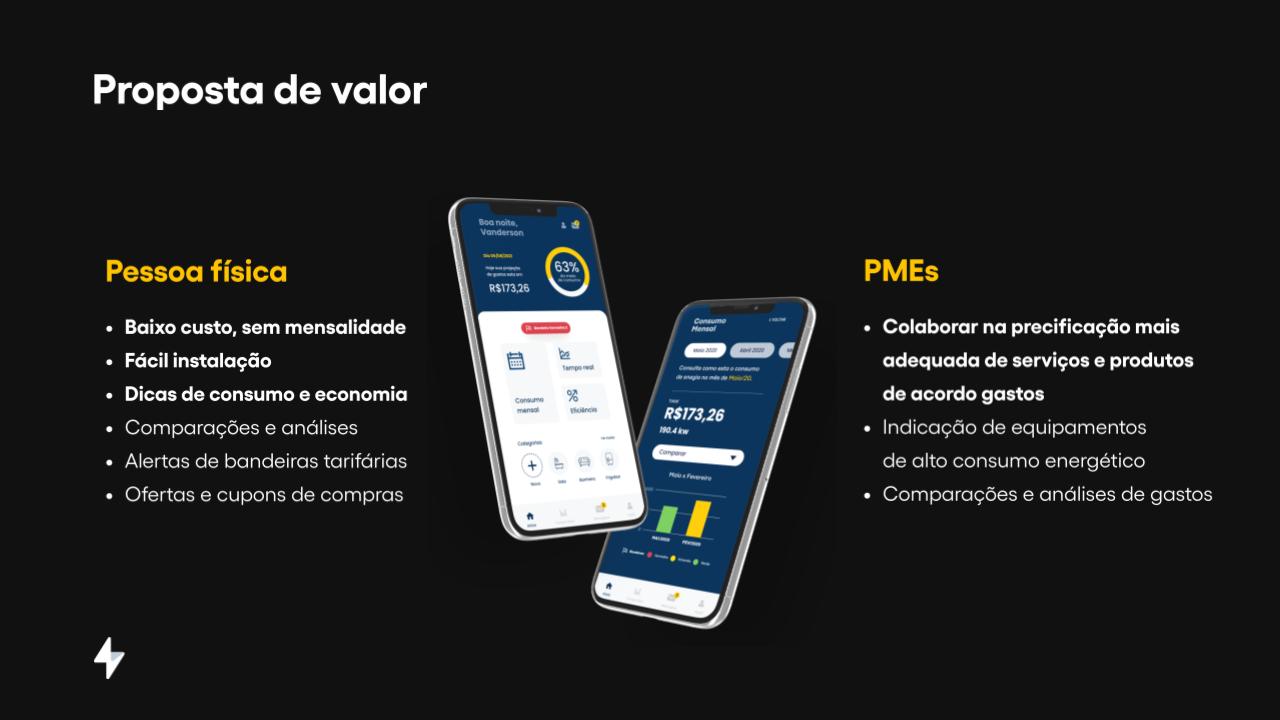
Business proposition.
While conducting market research, we discovered several solutions very similar to ours. It was evident that many had encountered the challenge of accurately measuring energy expenses, not only in Brazil but also internationally. However, within the country, we identified only XP Energy, a startup based in the north that initially targeted only businesses. Their billing model involved renting the equipment, resulting in a monthly cost for the customer, which, in our opinion, was not feasible.
Framer 2023
Amsterdam