← All work
Case study · Healthcare · VR/XR · Medical simulation · Apr–Sep 2026
Virtuali Surg: designing VR medical training, from simulation to authoring
As a contract Senior Product Designer for a French MedTech, I designed immersive training simulations for AbbVie and the French Army, shaped the VS Studio authoring platform and consolidated Design Ops across multiple client identities.
Role
Senior Product Designer · Contract
Timeline
Apr — Sep 2026 · Remote · French MedTech
Clients
AbbVie · French Army
Scope
VR UX, desktop authoring tool, design system, Design Ops
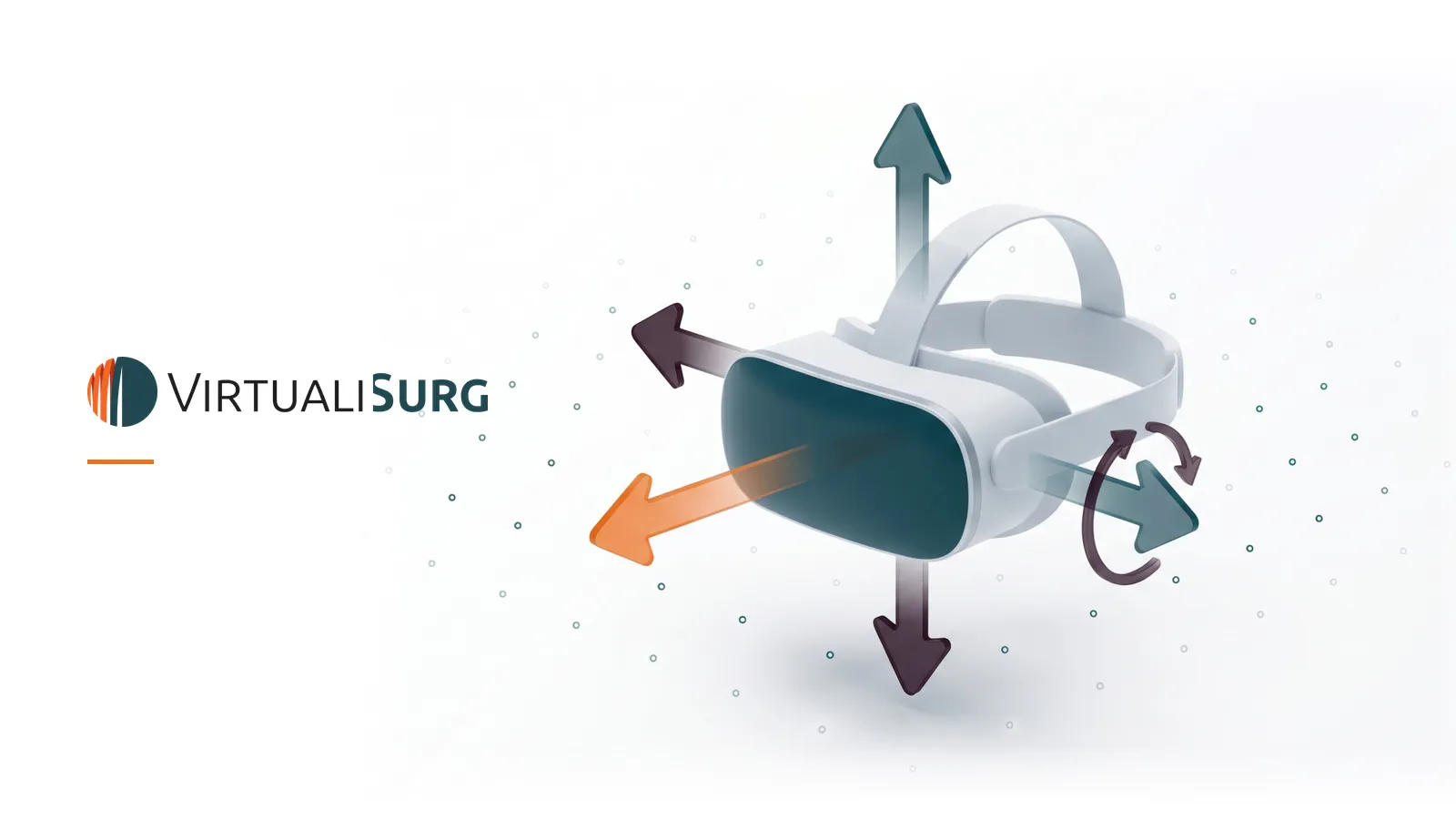
01 — Context
Training clinicians where mistakes cost nothing
Virtuali Surg is a French medtech building immersive medical training. Its simulations run on desktop, VR headsets and proprietary hardware, and each client — from pharma to defence — brings its own brand, protocols and learning goals.
02 — Problem
Every client brought a new brand, protocol and platform
Each simulation had to follow its client’s training protocol and carry its brand, across desktop, VR headsets and proprietary hardware. Building them was a specialist workflow, and every product carried its own visual identity. Two things had to change: training had to work for people in a headset — alone or as a team — and the system behind the simulations had to become repeatable.
03 — Users
Trainees, instructors and the teams who build the training
Clinicians practising a procedure in VR — alone, like the Botox injection training, or as a team, like the thoracic drain. Instructors who set up sessions, choose the case and follow participants and device status from a desktop. Content teams who author new simulations in VS Studio. And the clients behind each simulation — AbbVie and the French Army — each with its own protocol and identity.
04 — Constraints
What made it hard
Spatial interaction — comfort, layout, hand interaction and feedback matter as much as visual hierarchy.
Standalone headsets — thumbnails and contrast that work on a monitor can be hard to read in a headset.
Physical hardware — a proprietary console used alongside VR controllers.
Multiplayer — trainees practising one procedure together.
Clinical and client requirements — each simulation followed its client’s training protocol and brand, and the Army desktop had to be in French.
Distributed team — working remotely from Brazil with a team in France.
05 — My role
Senior Product Designer, end to end
Working remotely from Brazil with the team in France, I owned the user experience of the client simulations, shaped VS Studio — the platform used to author them — and led Design Ops to bring multiple client visual identities onto one consistent design system. The hardware console and the headset rendering fixes were done together with engineering.
06 — Key decisions
Four decisions that shaped the product
Design for the headset, not the monitor
Problem — the tool-selection menu in the drain simulation was hard to read on standalone headsets.
Decision — reorient the thumbnails, raise contrast to WCAG levels and, with engineering, fix anisotropic filtering.
Outcome — a legible tool menu on standalone headsets.
Build on the controllers trainees already know
Problem — the thoracic-drain procedure combines VR with a proprietary physical console, used by a team.
Decision — explore the console with engineering and pair it with the VR controllers trainees already know, instead of introducing a new input.
Outcome — hardware and VR input designed as one training experience.
Move authoring from specialists to content teams
Problem — building a simulation was a specialist workflow.
Decision — design VS Studio as a desktop + VR tool with a Patient Builder (patient, conditions, medical history) and a Room Builder (pre-staged operating suites, equipment placed in 3D).
Outcome — content teams configure patients without touching code.
Theme one system instead of redesigning per client
Problem — every simulation carried its client’s visual identity.
Options — redesign each product per client, or share foundations and theme them.
Decision — consolidate shared foundations and a documented component library, with states and spacing specs, shared across every Figma file.
Trade-off — client identity is expressed through theming rather than bespoke UI.
Outcome — the team could theme products per client without redesigning them.
07 — Solution
Three products, one design language
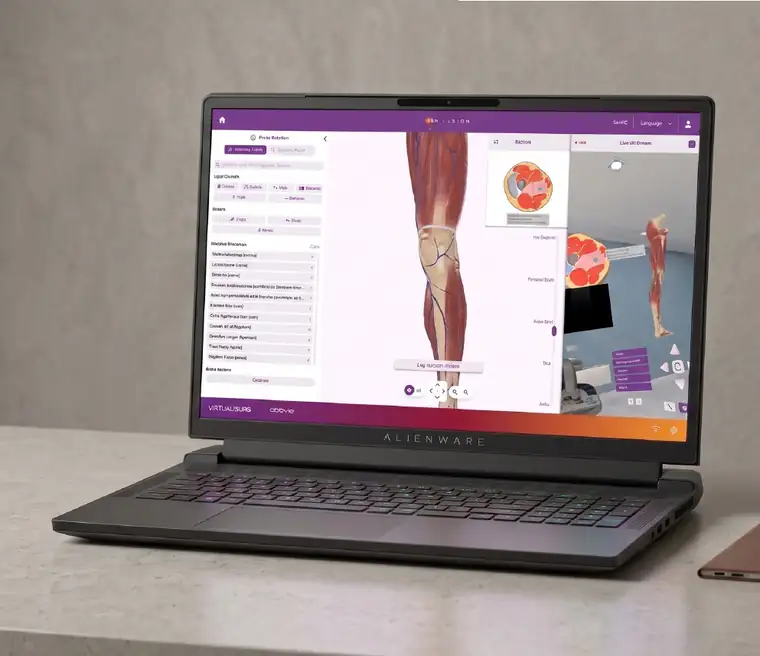
Botox VR training · AbbVie
A VR simulation for practising aesthetic injection technique, designed around the client’s training protocol and brand.
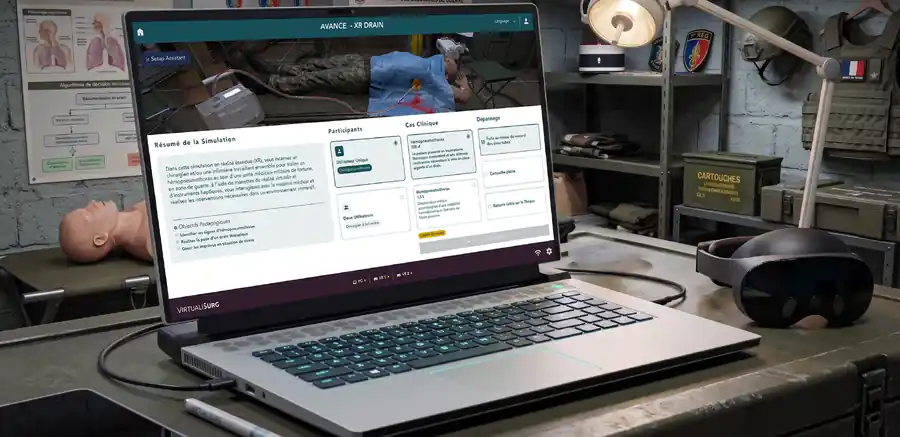
Thoracic drain · French Army
A multiplayer VR procedure simulation combined with proprietary hardware, so trainees practise together as a team.
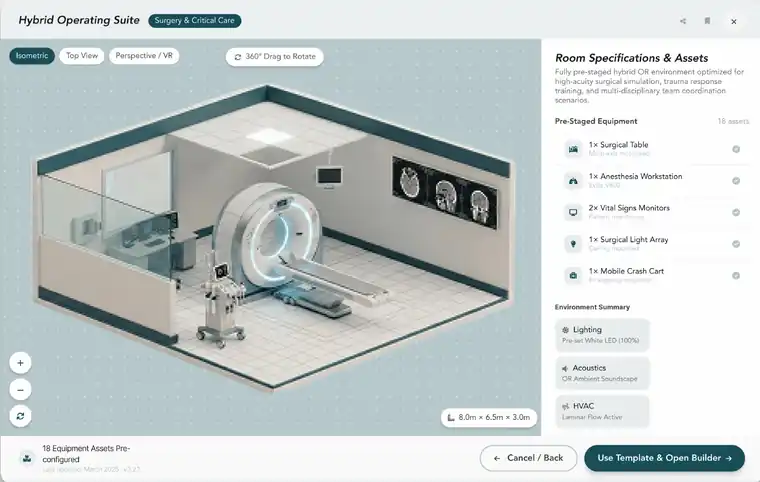
VS Studio · authoring platform
A desktop + VR tool for building simulations, turning a specialist workflow into something content teams can own.
In detail
From headset UI to hardware console
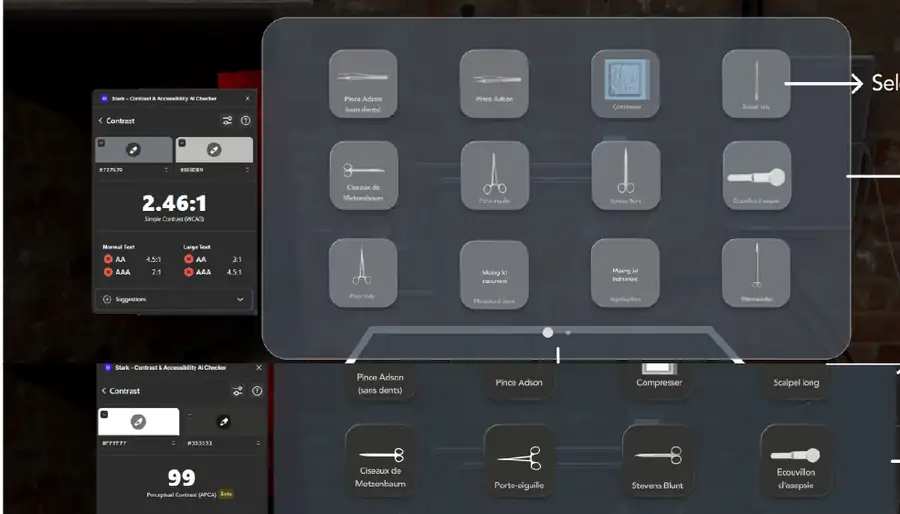
Drain VR · Tool selection menu. Standalone-headset legibility fixed by reorienting thumbnails, raising contrast to WCAG levels and fixing anisotropic filtering with engineering.
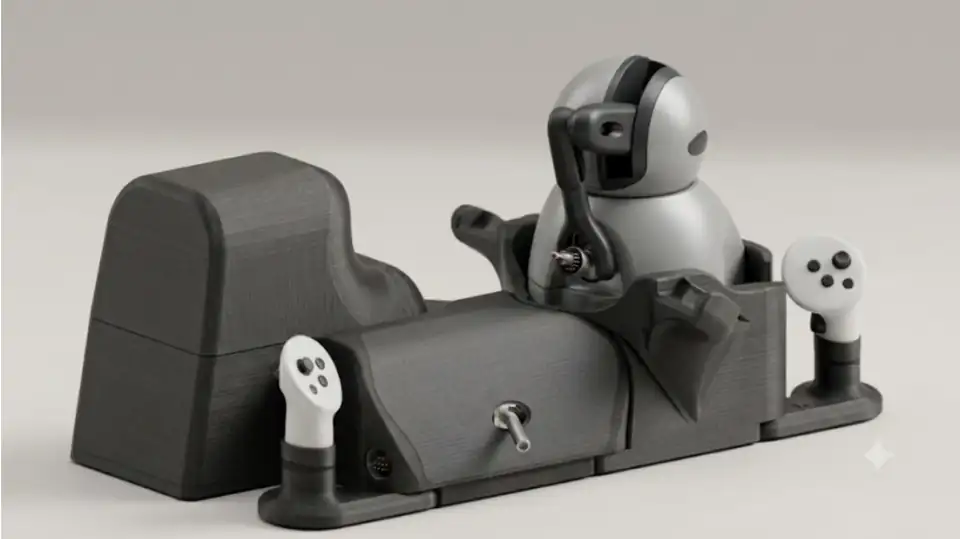
Thoracic drain · Console design. Physical console explored with engineering, paired with the VR controllers trainees already know.
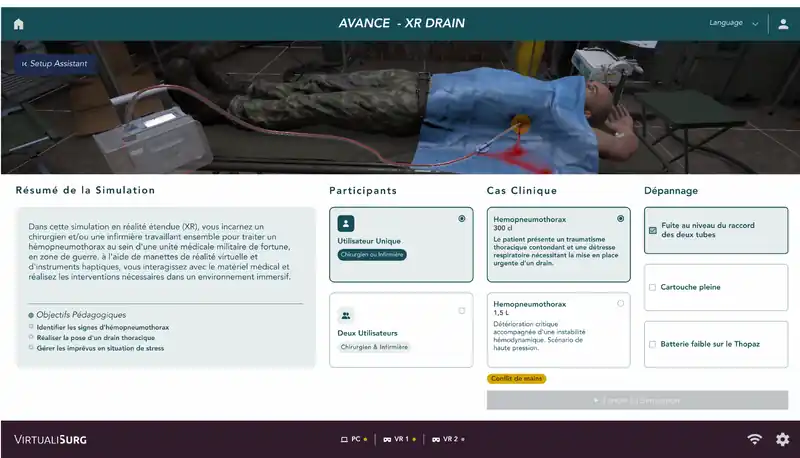
Drain desktop · Session setup. Case selection, participants and live device status for the instructor, in French for the Army.

VS Studio · Patient Builder. Content teams configure the patient, conditions and medical history without touching code.
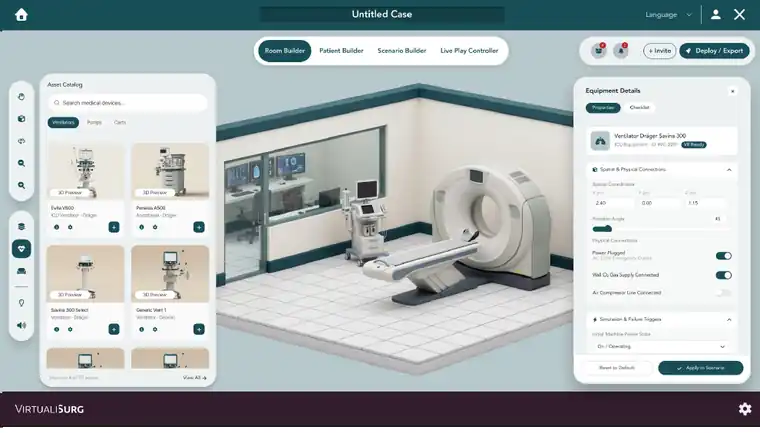
VS Studio · Room Builder. Pick a pre-staged operating suite, then place equipment in 3D.
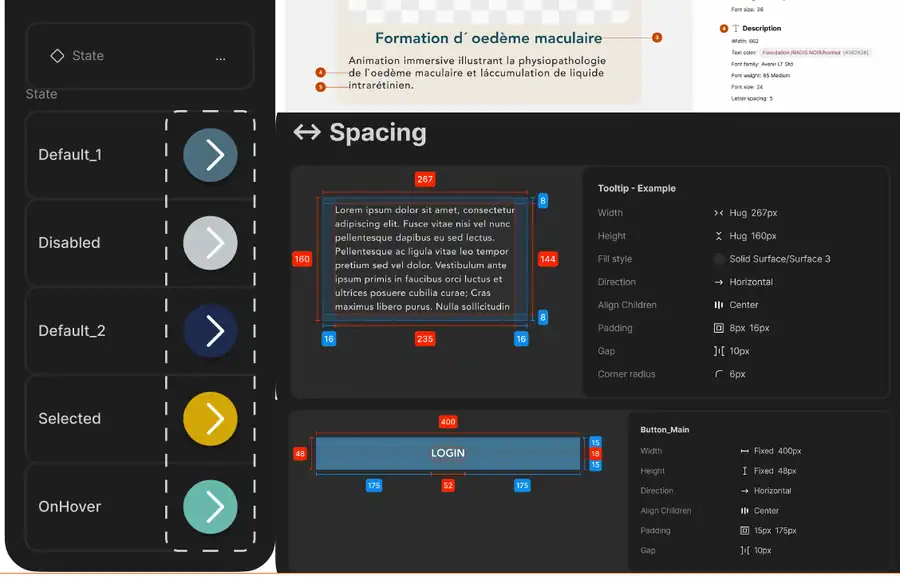
Design Ops · Desktop components. A documented component library with states and spacing specs, shared across every Figma file.
08 — Impact
What changed
No product metrics are shared for this engagement, so the impact is described through the work: legible tool menus on standalone headsets; a multiplayer procedure that pairs a hardware console with familiar controllers; instructors setting up sessions with live device status; content teams configuring patients and rooms in VS Studio without code; and one design system themed per client — the same approach I used to scale Kilometro Zero at Strada.
09 — Learnings
Designing for bodies in space, not just screens
VR changes the rules: comfort, spatial layout, hand interaction and feedback matter as much as visual hierarchy. Working across headset, desktop and physical hardware pushed me to design the whole training experience, not a single interface.

Contact
Let’s build products people trust.
Open to Senior Product Designer roles — remote or international. HealthTech, VR/XR, AI, and complex SaaS are where I do my best work.
Worked with
AbbVie · French Army · ADM · Cargill · Amaggi · LDC · Strada · Hoobox · Eretz.bio
© 2026 Antonio Prado · São Paulo, Brazil
Back to top ↑